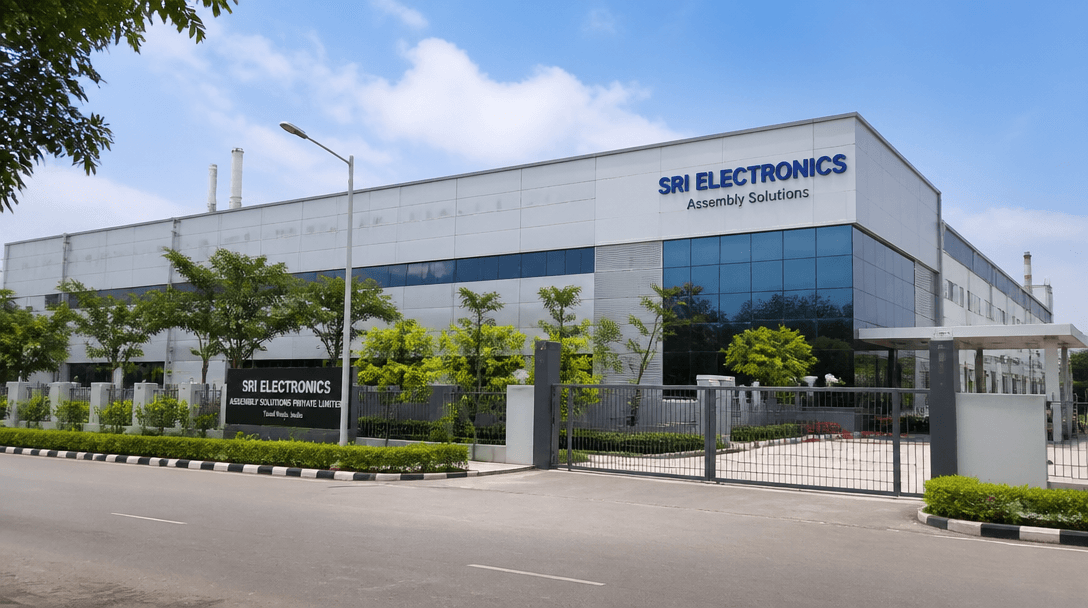
Walk into the Sriperumbudur SIPCOT area any morning at 6:30 AM and you'll see the shift change happening - thousands of workers in company-issued uniforms pouring out of factory gates while the next batch files in. Salcomp alone employs over 10,000 people at its Chennai facility. Flextronics, Foxconn, and the dozens of smaller EMS (Electronics Manufacturing Services) companies in this corridor collectively employ tens of thousands more.
Despite these numbers, very little honest information exists about what it's actually like to work inside these plants. Job seekers hear "₹12,000 starting salary" and "AC factory" and make decisions based on that. Here's the complete picture - the parts you'll appreciate and the parts nobody mentions in the job listing.
What Your Daily Life Looks Like Inside These Plants
Most electronics factories in the Chennai corridor run three shifts: morning (6 AM-2 PM), afternoon (2 PM-10 PM), and night (10 PM-6 AM). Your shift rotates weekly or bi-weekly depending on the company. You can't choose your shift - the production schedule decides for you.
Your day starts before the shift does. If you live in company-provided accommodation or shared rooms nearby, you wake up 60-90 minutes before shift time. If you're using the company bus, the pickup schedule is fixed and the bus doesn't wait. Missing the bus means either paying for an auto (₹100-₹200) or being marked late, which affects your attendance bonus.
At the factory gate, you go through a security check. Personal phones are not allowed on the production floor in most electronics plants - you lock your phone in a locker before entering. This is standard industry practice because of intellectual property protection (the products you're assembling belong to brands like Apple, Samsung, or Xiaomi, and they don't want production details leaking).
On the production floor, you're assigned to a specific station on the assembly line. Your job might be soldering components onto circuit boards, inserting specific parts into housings, operating a testing machine, or doing visual quality inspection. Each task takes 15-60 seconds per unit, and you repeat it hundreds of times per shift. The line moves at a fixed pace - you match the line speed, not the other way around.
Breaks are scheduled: typically a 30-minute lunch break and two 10-15 minute tea breaks. The canteen serves basic meals (rice, sambar, vegetables) - either free or subsidised at ₹10-₹20 per meal. The food is functional, not fancy, but it's consistent and saves you from cooking.
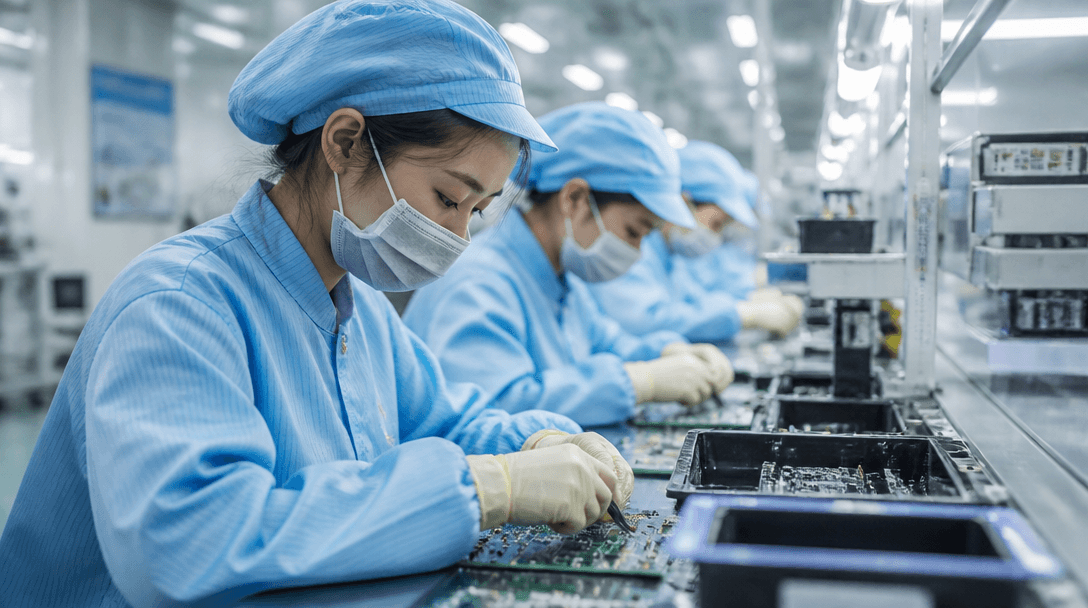
Quality inspection station with magnifying equipment at an electronics plant
The Pay Structure Decoded - Base, OT, Incentives
Understanding the pay structure is critical because the "salary" you're quoted is not what you take home. Here's how it typically breaks down at a company like Salcomp or Flextronics for an operator-level position.
Basic salary: ₹8,000-₹10,000 per month. This is the base on which your PF and ESI are calculated. It looks low, but it's only one component.
HRA (House Rent Allowance): ₹1,500-₹3,000. Added to your gross salary but not counted for PF calculation in most cases.
Special Allowance: ₹2,000-₹4,000. This is a catch-all category that companies use to bring total gross up to the advertised figure.
Attendance Bonus: ₹500-₹1,500. You get this only if you maintain perfect attendance for the month. Even one day of leave (including sick leave) can disqualify you. This policy is why electronics factory workers sometimes come to work sick - losing the attendance bonus hurts more than taking rest.
Overtime (OT): This is where your actual take-home jumps significantly. OT is calculated at 1.5x or 2x your hourly base rate. During peak production months (typically September-December for electronics, when global demand spikes before the holiday season), overtime can add ₹3,000-₹6,000 to your monthly pay. Some workers actively seek maximum overtime because it makes a meaningful difference.
Net result: an operator with a "salary" of ₹12,000 might take home ₹10,500-₹11,000 after PF and ESI deductions in a normal month, and ₹14,000-₹17,000 in a high-overtime month. A technician (ITI/diploma holder) starts higher - gross of ₹14,000-₹17,000, take-home of ₹12,500-₹15,000 normally, and up to ₹19,000-₹22,000 with overtime.
Working Conditions - The Honest Version
The good parts first: electronics factories are generally cleaner and more comfortable than automotive or heavy manufacturing plants. The assembly areas are air-conditioned - not for your comfort, but because electronic components are sensitive to heat and humidity. You're working indoors, protected from weather, in a well-lit environment. Compared to a foundry or an outdoor construction site, the physical conditions are significantly better.
The demanding parts: the work is monotonous. There's no polite way to say this. If you're someone who needs variety and mental stimulation throughout the day, assembly line work in an electronics factory will test your patience. You're performing the same small task repeatedly for 8 hours. Some people adapt well to this rhythm - they find it meditative, even calming. Others feel trapped within a week. Knowing which type you are before taking the job saves everyone's time.
Standing for extended periods is standard in most positions. Some stations have chairs, but many assembly line roles require you to stand throughout the shift because seated positions are ergonomically worse for the specific tasks involved. If you have back or leg problems, discuss this during your interview - some companies can accommodate you at seated stations.
The no-phone policy frustrates younger workers the most. Being disconnected from your phone for 8 hours feels like isolation if you're used to constant connectivity. You adjust after a week or two, but the initial period is genuinely uncomfortable for many people.
Chemical exposure is minimal in electronics assembly compared to automotive painting or chemical manufacturing, but it's not zero. Soldering involves lead-free solder (in most modern plants), flux fumes, and cleaning solvents. Companies provide masks and ventilation, but follow the safety protocols - the long-term health effects of ignoring them aren't worth the minor inconvenience of wearing protective equipment.
Can You Build a Career Here or Is It Just a Stepping Stone
Both, depending on your approach and ambition.
Within the factory, the career ladder for operators goes: Operator → Senior Operator → Line Leader → Line Supervisor → Production Executive. Each step typically takes 1-2 years of consistent performance. A Line Supervisor at Salcomp or Flextronics earns ₹22,000-₹30,000. A Production Executive can earn ₹35,000-₹50,000. Reaching the Executive level from Operator usually takes 5-7 years with good performance and the right timing.
Quality control and maintenance offer parallel tracks with slightly better pay. If you can move from the assembly line into the quality department (which values attention to detail and analytical thinking) or maintenance (which values ITI/diploma technical knowledge), your salary growth accelerates. QC and maintenance roles also carry more respect within the factory hierarchy and offer better working hours because they're not always tied to the shift rotation.
As a stepping stone, electronics factory experience is valuable for transitioning into automotive electronics, semiconductor packaging, or medical device manufacturing - industries that pay significantly better but look for people with clean-room manufacturing experience. After 2-3 years at Salcomp or Foxconn, your resume shows an employer that you can work in controlled environments, follow strict quality protocols, and maintain production targets. That experience translates directly to higher-paying manufacturing sectors.
Do This Before You Join
Before joining any electronics factory, visit the area during a shift change and talk to the workers coming out of the gate. Ask them three questions: "How's the overtime situation this month?" "Is the canteen food decent?" and "Would you recommend this company to your friend?" The answers to those three questions will tell you more about the company's actual work culture than any job listing or Glassdoor review ever could. The workers on the ground floor have no reason to sugarcoat their experience - and their honest feedback is the most reliable data point for your decision.