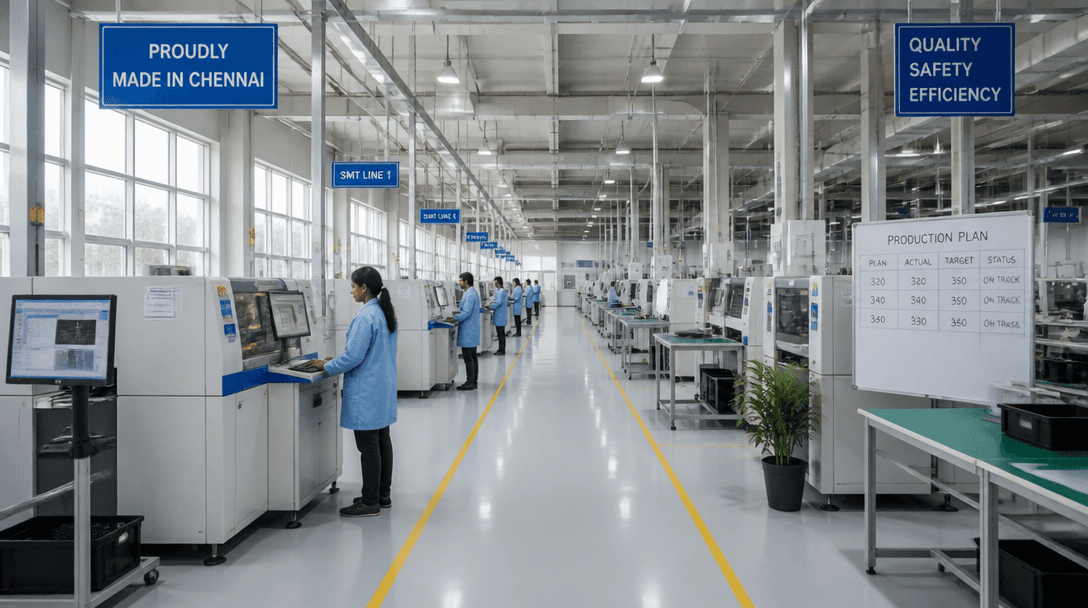
You finished your course - maybe ITI, maybe a diploma, maybe even a degree - and now you're staring at your phone wondering how people actually get jobs in Chennai's manufacturing sector. You've heard the names: Sriperumbudur, Oragadam, Ambattur. You know companies are hiring. But nobody seems to explain exactly how a fresher with zero experience walks into one of those factories and comes out with an offer letter.
That's what this article is for. Not theory. Not motivational quotes. Just the actual process that works, based on what I've seen help hundreds of job seekers land their first manufacturing role in Chennai.
The first thing you need to understand is that Chennai's manufacturing sector is not one single thing. There are auto companies, electronics assembly plants, food processing units, pharmaceutical packaging facilities, and heavy engineering workshops. Each one hires differently, pays differently, and values different skills. Treating them all the same is the first mistake most freshers make.
Where Manufacturing Jobs Actually Exist in Chennai
Chennai's manufacturing belt stretches across several industrial corridors, and knowing which area to target saves you weeks of wasted effort.
The Sriperumbudur-Oragadam corridor is the biggest hub. This is where you'll find companies like Samsung, Hyundai, Renault-Nissan, Daimler, and a massive network of auto component suppliers. If you have an ITI in fitter, turner, or welder trades, this corridor should be your primary target. Most plants here run three shifts and hire in batches - meaning they bring in 20-50 freshers at a time when production demands increase.
Ambattur Industrial Estate is older but still active. You'll find smaller manufacturers here - precision engineering shops, plastic moulding units, small-batch electronics companies. The pay is usually ₹12,000-₹15,000 per month to start, but the advantage is that smaller companies often give you broader exposure. You learn more trades in less time because they can't afford to keep you on just one task.
The Mahindra World City zone near Chengalpattu has been growing steadily. Infosys has a campus there, but more importantly for manufacturing job seekers, several auto ancillary and logistics companies operate from this SEZ. The commute from central Chennai is long, but companies here often provide transport.
Guindy and Ekkatuthangal still have a few manufacturing units, though many have shifted to IT parks. If you're specifically looking at printing, packaging, or small-scale electronics, these areas still have openings. Don't overlook them just because they're not as flashy as Oragadam.
How to Pick the Right Area for You
Start by checking where you can realistically commute to or where you can afford to stay. A job that pays ₹14,000 in Oragadam might not be worth it if you're spending ₹5,000 on room rent and ₹2,000 on transport. Many companies provide hostel accommodation or shared rooms near the plant - ask about this during your interview or when you see the job listing. It makes a significant financial difference in your first year.
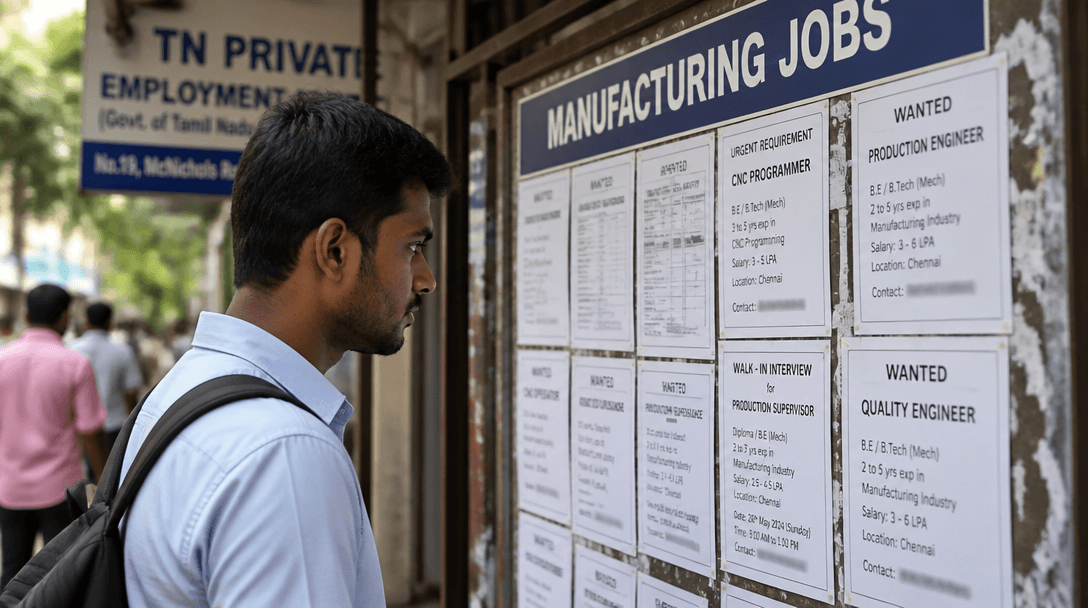
Job seeker reviewing manufacturing job listings on a notice board in Chennai
What Qualifications Actually Matter for Entry-Level Roles
Here's something that surprises most freshers: for operator-level manufacturing jobs in Chennai, your marks matter far less than your trade and your willingness to work shifts.
If you have an ITI certificate in fitter, turner, electrician, welder, or CNC operator, you're already qualified for the majority of entry-level positions. Companies like Salcomp and Flextronics regularly hire ITI freshers in batches. They run their own training programs for the first 2-4 weeks before putting you on the production line.
Diploma holders in mechanical, electrical, or electronics engineering have a slight edge - you'll typically start as a technician rather than an operator, which means better starting pay (₹14,000-₹18,000 versus ₹11,000-₹14,000) and a faster track to supervisory roles. But having a diploma doesn't automatically get you hired. You still need to go through the same process of finding openings and attending walk-ins.
BE graduates sometimes apply for manufacturing operator roles out of desperation, and while companies will hire you, be aware that some employers hesitate to take degree holders for operator positions because they expect you to leave within six months for an IT job. If you genuinely want to build a career in manufacturing, make that clear in your interview.
Certifications That Give You an Edge
Beyond your base qualification, certain short-term certifications can push your application to the top of the pile. A basic CNC programming certificate from any NSDC-approved centre shows you can handle computerised machinery. A quality inspection course - even a two-week one - tells employers you understand the basics of maintaining production standards. Six Sigma Yellow Belt is another one that manufacturing HR teams notice, and you can complete it online for under ₹2,000.
These are not mandatory. You can get hired without them. But when 40 freshers show up to a walk-in and only 15 spots are open, the person with a CNC certificate gets noticed first.
How to Find Genuine Openings Without Getting Scammed
This is where most freshers waste the most time and sometimes lose money. Let me be direct: if anyone asks you to pay money to attend an interview or to "register" for a job opportunity, walk away. No legitimate employer in Chennai charges candidates for interviews.
The most reliable way to find manufacturing jobs is through the TNPCB (Tamil Nadu Pollution Control Board) notice boards and the employment exchange. Yes, the government employment exchange still works for manufacturing roles. Register at your local employment exchange office - it's free, and companies like Ashok Leyland, TVS, and several auto component makers still send their requirements there.
Company websites are your next best source. Go directly to the careers page of manufacturers you want to work for. Salcomp, Foxconn, Flextronics, Hyundai - all of them post walk-in dates on their websites or social media pages. Bookmark these and check them every Monday morning.
LinkedIn might seem too corporate for manufacturing jobs, but it's increasingly useful. Many HR managers at Chennai factories post walk-in announcements on LinkedIn. You don't need a polished profile - just a basic one with your qualification, trade, and the fact that you're looking for manufacturing roles in Chennai. I've seen freshers get DMs from HR teams this way.
WhatsApp Groups and Telegram Channels
Job groups on WhatsApp and Telegram are a double-edged sword. Some are genuinely useful - run by HR consultancies or placement officers who share real openings daily. Others are full of recycled listings and scam links. Here's how to tell the difference: genuine groups share specific details like company name, exact location, interview date, and documents to bring. Scam groups give vague descriptions and ask you to "call this number for more details."
Our own Jobs Tamizhan Telegram channel and WhatsApp channel share verified openings daily. I personally check each listing before posting it. That's the standard you should hold any job group to - verified information, not copy-pasted rumours.
What to Expect in Your First Month on the Job
Getting hired is only half the challenge. Your first month in a manufacturing job determines whether you stay for a year or quit within 90 days. Here's what to prepare for.
Most companies start you with an induction programme lasting 3-7 days. You'll learn about safety protocols, the production process, quality standards, and your specific role on the line. Pay attention during this period - not because there's an exam, but because the supervisors notice who's engaged and who's on their phone. First impressions with your line supervisor matter more than your interview performance when it comes to getting good assignments later.
Shift work takes adjustment. If you're on a rotating shift schedule - which most manufacturing plants use - your body needs about two weeks to adapt to night shifts. Eat properly before your shift, carry enough water, and don't skip meals because you're tired. Many freshers develop health issues in the first three months simply because they don't adjust their eating and sleeping patterns to shift work.
The work itself is repetitive. That's the nature of manufacturing. If you're on an assembly line, you might perform the same task 500 times in a shift. The people who succeed in manufacturing are the ones who find ways to improve their speed and accuracy over time rather than just going through the motions. Supervisors notice quality and speed - and that's what gets you promoted from operator to senior operator within the first year.
Building Relationships on the Factory Floor
Your colleagues on the production line are your most valuable resource. Senior operators who've been there for two or three years know which supervisors to approach for overtime opportunities, which departments have better working conditions, and when the next round of permanent positions opens up. Be respectful, be helpful, and don't act like you're too good for the work - even if you have a higher qualification than everyone around you. The factory floor has its own hierarchy, and it's built on experience and attitude, not degrees.
The Bottom Line
One thing I want to leave you with: apply to more companies than you think you need to. Most freshers apply to three or four places and then wait. In Chennai's manufacturing sector, the numbers game matters. Apply to fifteen companies, attend every walk-in you can physically get to, and treat each one as practice for the next. Your fifth interview will go better than your first, guaranteed.
The manufacturing sector in Chennai is hiring - consistently, in volume, across multiple corridors. Your job right now isn't to find the perfect company. It's to get your foot in the door, learn the work, and build from there. Every experienced manufacturing professional in this city started exactly where you are right now.