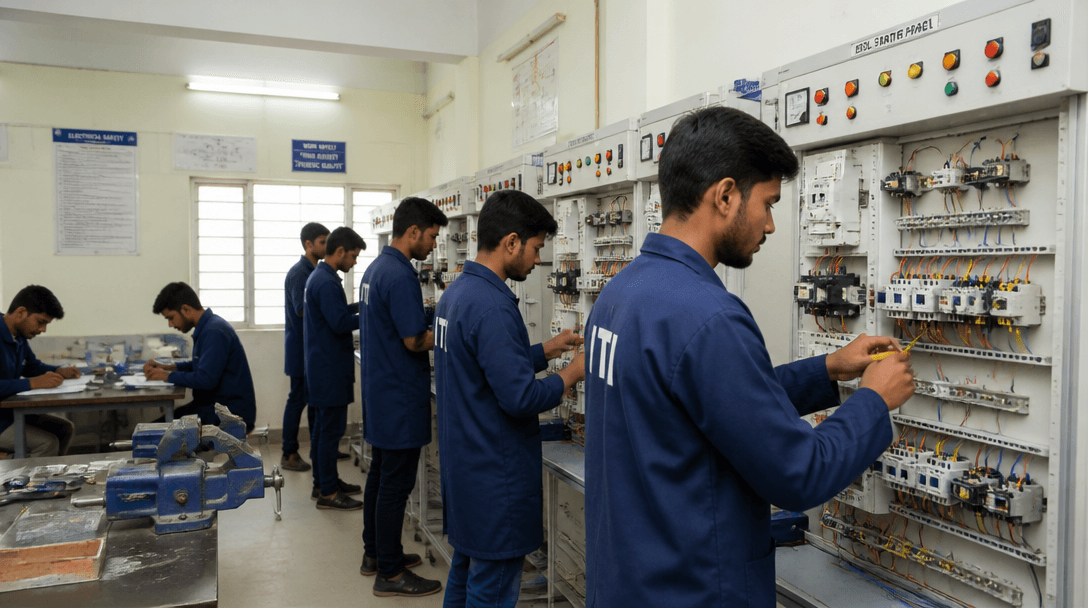
When you picked your ITI trade two years ago, you probably chose based on what seats were available, what your family suggested, or what sounded interesting. Nobody sat you down and said: "Here's which trades actually get you hired fast in Tamil Nadu, and here's which ones will have you sending applications for months with no response."
That's the conversation I want to have with you right now. Because in 2026, the gap between high-demand trades and low-demand trades in Tamil Nadu is wider than ever. Some ITI holders are getting hired within two weeks of completing their course. Others with equally valid certificates are struggling for six months or more. The difference isn't talent - it's trade selection and knowing where to look.
The ITI Trades with the Highest Demand Right Now
Fitter is still the king of ITI trades in Tamil Nadu. If you're a fitter, you can walk into almost any manufacturing cluster in the state and find openings. The reason is straightforward: every single manufacturing company - whether they make auto parts, electronics, or consumer goods - needs fitters. Hyundai in Sriperumbudur, Royal Enfield in Oragadam, Ashok Leyland in Hosur, Titan in Hosur - all of them recruit fitters regularly. Starting salaries range from ₹12,000 to ₹16,000 depending on the company and location, with overtime pushing take-home pay to ₹18,000-₹20,000 in your first year.
Electrician comes in a close second. With Tamil Nadu's push toward renewable energy, electric vehicle manufacturing, and continued industrial expansion, electricians are being hired not just in factories but also in construction, building maintenance, and solar installation companies. The advantage of the electrician trade is versatility - you're not locked into manufacturing. Companies like L&T, Schneider Electric, and dozens of electrical contractors across Chennai and Coimbatore are always looking for qualified electricians.
Welder is the trade that pays the most at the entry level among all ITI courses. Skilled welders, especially those with TIG and MIG welding certifications, can start at ₹15,000-₹18,000 in shipyards, heavy engineering units, and pipeline companies. The demand is particularly strong in Ennore (shipping and port-related), Tiruvallur (heavy engineering), and across the Hosur-Bengaluru corridor. The catch: welding is physically demanding work, and not everyone can handle the heat and protective equipment for 8-12 hour shifts.
CNC Operator - The Fast-Growing Trade
CNC operator is the trade that's seen the steepest increase in demand over the past three years. As more Tamil Nadu factories automate their production lines, they need operators who can programme and run CNC machines. If you completed CNC operation as your ITI trade, or if you did fitter/turner and then added a CNC short-term course on top, you're looking at starting salaries of ₹14,000-₹18,000 with rapid jumps once you prove your programming skills. Companies like Sundram Fasteners, India Pistons, and Lucas-TVS specifically look for CNC-trained ITI holders.
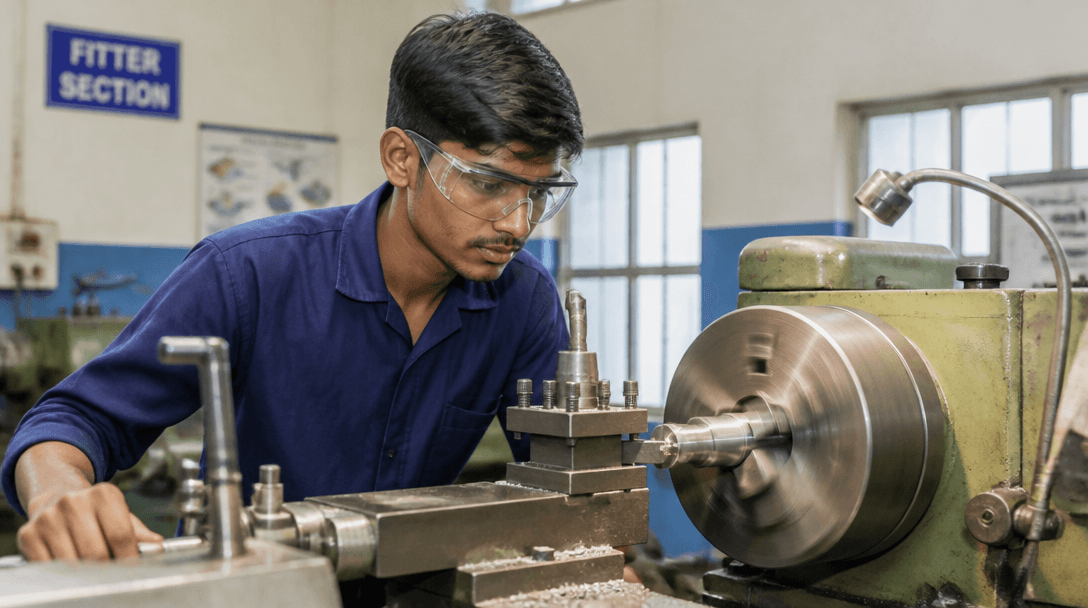
CNC machine operation workstation in a modern manufacturing plant
Trades That Are Oversaturated - Be Honest with Yourself
This is the part nobody wants to hear, but you need to know it before you spend months wondering why you're not getting callbacks.
COPA (Computer Operator and Programming Assistant) is massively oversaturated. Every ITI in Tamil Nadu offers COPA, and the number of graduates far exceeds the number of positions that specifically require COPA certification. The skills you learn in COPA - basic computer operation, data entry, MS Office - are skills that every B.Com and B.Sc graduate also has. You're competing against a much larger pool, and employers often prefer degree holders for these desk-based roles. If you have a COPA certificate, you're not unemployable, but you need to supplement it with specialised software skills like Tally, SAP basics, or advanced Excel to stand out.
Mechanic Motor Vehicle (MMV) used to be a strong trade when the auto service industry was booming. It's still viable, but the shift toward electric vehicles means that traditional MMV skills are becoming less relevant each year. If you're an MMV holder, consider taking an EV servicing short course. Maruti, Hyundai, and Tata are all training their service networks on EV maintenance, and being ahead of that curve will make you far more valuable than a standard MMV certificate alone.
Draughtsman (Mechanical) is another trade where supply has outpaced demand. AutoCAD skills are now taught in almost every engineering diploma programme, so companies have a wider talent pool to choose from. Draughtsman ITI holders who've added SolidWorks or CATIA skills still get hired well, but the basic trade certificate alone doesn't carry the weight it did five years ago.
Where ITI Holders Actually Get Hired in Tamil Nadu
The geography of ITI hiring in Tamil Nadu follows the industrial corridor map almost exactly. Understanding this map saves you from applying to areas where your trade isn't in demand.
Chennai and its suburbs (Sriperumbudur, Oragadam, Ambattur, Guindy) absorb the largest number of ITI holders across all trades. The auto and electronics manufacturing ecosystems here are mature, and companies have established hiring pipelines. If you're from a southern or western district and willing to relocate, Chennai should be your first target.
Coimbatore is the second-largest hiring centre, but the industry mix is different. Coimbatore is dominated by textile machinery, pump manufacturers, wet grinders, and auto component suppliers. Fitters, machinists, and turners do particularly well here. Companies like Elgi Compressors, Lakshmi Machine Works, and Pricol are major employers. The advantage of Coimbatore over Chennai is lower living costs - your ₹13,000 salary goes further here than ₹15,000 in Chennai after you factor in rent and food.
Hosur has quietly become one of the best places for ITI holders in Tamil Nadu. It sits right on the Karnataka border, and companies like Ashok Leyland, Titan, TVS Motors, and dozens of auto ancillary units operate here. The Hosur SIPCOT industrial area alone has over 200 manufacturing units. If you're from Dharmapuri, Krishnagiri, or Salem district, Hosur is accessible without the cost and complexity of moving to Chennai.
Tiruchirappalli (Trichy) has BHEL, OFT (Ordnance Factory), and a growing number of defence manufacturing subcontractors. If you're an ITI holder with an interest in heavy engineering or defence manufacturing, Trichy is worth investigating. BHEL in particular takes ITI apprentices regularly through their official portal.
Realistic Salary Expectations by Trade
I'm giving you real numbers here - not the inflated figures you see on job portals, and not the depressing minimum wages that make you question your career choice. These are actual take-home figures for ITI freshers in Tamil Nadu in 2026, including the typical overtime that most manufacturing jobs involve.
Fitter: ₹12,000-₹16,000 base, ₹15,000-₹20,000 with overtime. After one year, expect ₹16,000-₹22,000. Top companies like Hyundai and Royal Enfield pay at the higher end.
Electrician: ₹12,000-₹15,000 base, ₹14,000-₹19,000 with overtime. Electricians who get into industrial maintenance (rather than production) often earn more because of the skill premium. After two years, ₹18,000-₹25,000 is realistic.
Welder: ₹14,000-₹18,000 base, ₹18,000-₹24,000 with overtime. Welders in shipyards and pipeline projects can earn significantly more - ₹25,000-₹35,000 - but these are often contract positions with less job security. The premium reflects the physical difficulty of the work.
CNC Operator: ₹13,000-₹18,000 base, ₹16,000-₹22,000 with overtime. CNC operators who can independently programme (not just run pre-set programmes) command ₹20,000-₹30,000 within two years. This is one of the fastest paths to a ₹30,000+ salary for an ITI holder.
Turner/Machinist: ₹12,000-₹15,000 base, ₹14,000-₹19,000 with overtime. Steady demand but fewer dramatic salary jumps compared to CNC or welding. Specialising in precision machining (working to tight tolerances) increases your market value significantly.
Understanding Take-Home vs CTC
When a company quotes you a "CTC" (Cost to Company), your actual take-home will be 15-25% less because of PF, ESI, and other deductions. A CTC of ₹1,80,000 per annum translates to roughly ₹12,500-₹13,000 per month in hand. Always ask for the in-hand amount during salary discussions - not just the CTC. Many freshers get confused by the CTC number and feel shortchanged when they receive their first salary. That gap is normal, but knowing about it in advance helps you plan your budget.
Choosing Your Trade Wisely
If you're currently in ITI and haven't chosen your trade yet, choose fitter, electrician, or CNC operator - in that order of versatility. If you've already completed a less-in-demand trade, don't panic. Add a relevant short-term course on top (CNC, PLC, quality inspection) and target the industrial areas where your supplemented skills are needed. Your ITI certificate is a foundation, not a ceiling - what you build on top of it in the next 12 months determines how quickly you get hired and how fast your salary grows.