The most common question I get from freshers is some version of: "Bro, what salary can I expect?" followed by a screenshot of a job portal showing ₹3,00,000-₹5,00,000 per annum for a role they've applied to. When I tell them the actual take-home will be ₹15,000-₹18,000 per month after deductions, there's genuine shock. The gap between advertised salary figures and real take-home pay is the single biggest source of disappointment for Tamil Nadu freshers entering the job market.
This article gives you the real numbers. Not CTC projections with inflated variable pay components. Not salary ranges from national job portals that don't reflect Tamil Nadu's specific market. Actual in-hand amounts that real freshers are taking home in 2026, across every major sector in the state.
IT Sector - What Tech Freshers Actually Take Home
The big IT service companies - TCS, Infosys, Wipro, Cognizant, HCL - form the largest employer base for engineering graduates in Tamil Nadu. Their campus hiring packages have become standardised to the point where there's little mystery, yet freshers still get confused by the CTC vs take-home gap.
TCS: The standard campus offer for B.E/B.Tech graduates (called "Ninja" hiring) is ₹3.36 LPA CTC. Your monthly take-home after PF, professional tax, and insurance deductions is approximately ₹22,000-₹24,000. TCS's "Digital" hiring tier offers ₹7 LPA to students with specific skills (AI, cloud, full-stack), with take-home of around ₹42,000-₹45,000. The vast majority of campus hires are on the ₹3.36 LPA tier.
Infosys: Standard campus offer is ₹3.6 LPA, with monthly take-home of ₹23,000-₹26,000. Their "Power Programmer" and "Specialist Programmer" tracks offer ₹5-6.5 LPA for top performers in their HackWithInfy coding competition. These higher packages are genuine but competitive - maybe 5-10% of campus hires get them.
Cognizant: GenC Next programme offers ₹4 LPA, with take-home around ₹25,000-₹28,000. GenC Pro offers ₹6.75 LPA for candidates with advanced certifications. Cognizant's Chennai development centres in Sholinganallur and MEPZ hire significant numbers through these programmes.
Wipro: ₹3.5 LPA standard package, ₹22,000-₹25,000 monthly take-home. Wipro's Elite and Turbo hiring tracks offer ₹3.5-6.5 LPA based on performance in their selection process.
Product companies and startups in Chennai pay differently. Companies like Zoho, Freshworks, and Chargebee offer ₹5-12 LPA for freshers, but they hire far fewer people and the selection bar is much higher. Zoho in particular is known for hiring based on aptitude rather than college pedigree - if you clear their test, your college tier doesn't matter. Their Chennai campus in Thaiyur hires a few hundred freshers annually at ₹5-7 LPA.

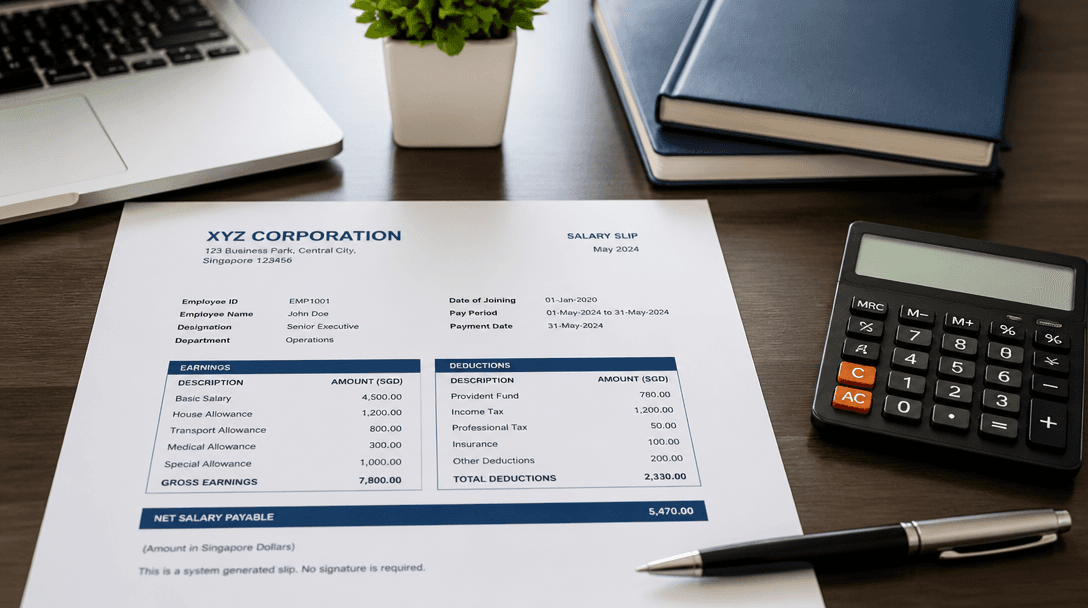
Salary slip and bank documents on a work desk representing first-job earnings
Manufacturing - Real Pay Across Qualification Levels
Manufacturing salaries in Tamil Nadu follow a more structured hierarchy based on qualification rather than individual negotiation.
10th/12th pass (Operator level): ₹9,000-₹12,000 take-home. This is the floor for unskilled or semi-skilled operators in electronics assembly, garment manufacturing, and food processing. Overtime can push take-home to ₹13,000-₹16,000 during peak months. These roles are physically demanding but accessible to anyone with basic literacy.
ITI holders: ₹11,000-₹16,000 take-home depending on trade and company. Fitters and electricians at the higher end, COPA and draughtsman at the lower end. With overtime: ₹14,000-₹20,000. After one year of experience, expect a ₹2,000-₹3,000 increment if you stay with the same company, or a ₹3,000-₹5,000 jump if you move to a different employer.
Diploma holders: ₹13,000-₹18,000 take-home as Graduate Engineering Trainee (GET) or Junior Technician. Top-tier employers like Hyundai, Renault, and Caterpillar pay at the higher end. After the training period (6-12 months), salary typically bumps to ₹16,000-₹22,000. Diploma holders who enter quality control or maintenance departments often see faster salary growth than those on the production line.
BE/B.Tech in manufacturing: ₹15,000-₹22,000 take-home as GET. Companies like Ashok Leyland, TVS, and L&T hire engineering graduates at ₹3-4 LPA CTC. The first-year experience as a GET in manufacturing is intense - you rotate across departments, learn the production process end to end, and are evaluated continuously. Those who perform well move to supervisory roles within 18-24 months.
BPO, Retail, and Service Sector - The Entry-Level Reality
BPO (Business Process Outsourcing): Voice process roles in Chennai's BPO hub (OMR, Ambattur) start at ₹12,000-₹16,000 take-home for freshers. International voice processes (handling US/UK clients) pay ₹15,000-₹20,000 because of the night shift premium and English fluency requirement. Non-voice processes (data entry, back office) start lower at ₹10,000-₹13,000. BPO salaries have stagnated over the past five years - what was considered good pay in 2018 is now barely keeping up with inflation.
Retail: Working at branded retail stores (Reliance Digital, Croma, Lifestyle, Chennai Silks) pays ₹10,000-₹15,000 as a sales associate. The real compensation in retail comes from sales incentives - a good salesperson at a high-traffic store can earn ₹5,000-₹10,000 in monthly incentives on top of base pay. Showroom and mall-based retail jobs in T. Nagar, Phoenix Mall, and Express Avenue are the most lucrative locations in Chennai because of higher footfall.
Banking and insurance (entry-level): If you clear bank exams and join as a clerical staff, starting take-home is ₹22,000-₹26,000 including allowances. Insurance companies like LIC, ICICI Prudential, and HDFC Life hire development officers and agents at base pay of ₹8,000-₹12,000 plus commission. The commission-based structure means your income is unpredictable - some months you earn well, other months you barely cover your expenses.
Government Sector - Starting Pay After Selection
Government salaries are transparently defined by the pay commission, which removes all ambiguity - a welcome change from the private sector's CTC obfuscation.
TNPSC Group 4 (VAO, Junior Assistant, Typist): Basic pay starts at Level 1-2, with total monthly take-home of ₹25,000-₹30,000 including DA and HRA. The take-home varies by posting location - urban postings get higher HRA than rural ones.
TNPSC Group 2 (Deputy Collector, DSP, RDO): Starting take-home of ₹42,000-₹50,000. These are highly competitive positions - the selection ratio is often 1:200 or worse - but the starting salary combined with perks, pension, and social status makes them the most sought-after government roles.
Railway Recruitment (Group D, ALP): Take-home of ₹20,000-₹25,000 for Group D (track maintainer, helper) and ₹25,000-₹30,000 for Assistant Loco Pilot. Railway employees get additional benefits including free rail travel passes and housing.
Armed Forces (through CDS or Agniveer): Agniveer scheme monthly pay is ₹30,000 in the first year, increasing to ₹40,000 by the fourth year, plus a Seva Nidhi lump sum of ₹11.71 lakh at the end of the 4-year engagement. CDS-selected officers start at approximately ₹56,000 take-home plus free accommodation, food, and medical coverage.
How to Make Your First Salary Work - Budgeting That Matters
Whatever your starting salary, the 50-30-20 rule adapted for Tamil Nadu freshers works: 50% for needs (rent, food, transport), 30% for family support (if applicable), and 20% saved. If you're earning ₹15,000 and sending ₹5,000 home, you have ₹10,000 for living expenses and savings. That's tight but workable if you share accommodation and cook at home.
Open a savings account at the same bank where your salary is credited and set up an automatic transfer of ₹1,000-₹2,000 to a recurring deposit on salary day. This removes the temptation to spend everything. Over 12 months, even ₹1,500 per month in a recurring deposit gives you ₹18,000 plus interest - enough to handle an emergency without borrowing.
Avoid two financial traps that catch Tamil Nadu freshers: personal loans for phones (a ₹20,000 phone on EMI costs you ₹23,000-₹25,000 after interest - buy a ₹8,000-₹10,000 phone outright instead) and credit cards (if you can't pay the full balance monthly, don't use it at all).
The Long View
Your first salary is not your final salary - it's the starting line. The decisions that actually determine your earnings three years from now are: whether you build relevant skills during your first job, whether you change employers strategically (at the right time, for the right reasons), and whether you avoid debt that traps you in jobs you'd otherwise leave. Focus on learning more than earning in year one, and the earning will follow faster than you expect.