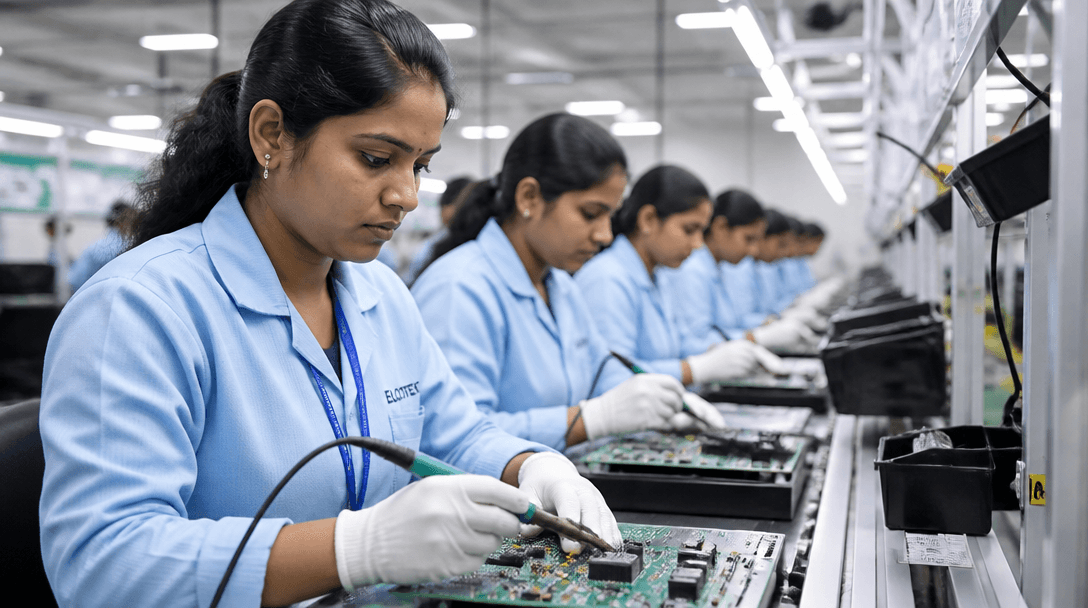
Tamil Nadu employs more women in factory jobs than almost any other state in India, and for good reason - the electronics and garment sectors here have been built substantially on women's labour, and the state has a relatively developed ecosystem of hostels, transport, and support that makes factory work practical for women who might otherwise not be able to take it. For a young woman looking for a first job, especially from a smaller town or a family that's cautious about her working away from home, understanding how this ecosystem works can open a genuine, respectable path to financial independence.
This is an honest guide - the real opportunities, the support that exists, the safety and legal protections you're entitled to, and how to tell a good employer from one to avoid.
Why Tamil Nadu Leads in Employing Women in Manufacturing
Two large industries in the state - electronics assembly and textiles/garments - have historically preferred to hire women in large numbers for assembly and finishing work, valuing precision and consistency. Over decades, this created supporting infrastructure that many other states lack: company hostels for women, dedicated transport, women's welfare officers, and hiring pipelines specifically oriented toward women candidates. That infrastructure is the real reason Tamil Nadu is more accessible for women than most places - the jobs come bundled with the practical support that makes them possible to actually take.

A woman supervisor in safety gear inspecting work on a factory floor
Which Sectors Hire the Most Women and For What Roles
Electronics manufacturing (in and around Sriperumbudur and other clusters) hires women in very large numbers for assembly, testing, and quality-inspection roles. The environment is typically clean, air-conditioned, and indoors, and the work suits anyone with steady hands and attention to detail. Qualifications for operator roles are usually modest (10th/12th), with technician roles open to ITI and diploma holders.
Textiles and garments across the state's textile belt (Tiruppur, Coimbatore, and surrounding areas) employ women in spinning, stitching, checking, and packing. Auto component and light engineering units increasingly hire women for machine operation and assembly as well. Pharmaceutical and food-processing packaging is another sector with steady women's hiring. Across these, starting pay is broadly in line with the wider entry-level manufacturing range, often with hostel and canteen support that reduces living costs significantly.
Hostels, Transport, and the Support Systems That Matter
For many women - and their families - the deciding factor isn't the salary, it's whether safe accommodation and transport are provided. Many established manufacturers offer women's hostels with wardens and security, subsidised or free canteen food, and company bus transport on fixed routes with fixed timings. These aren't luxuries; they're what make it possible to work at a plant that isn't within daily reach of home, and they materially improve both safety and savings.
When you evaluate an opportunity, treat the support package as part of the compensation. A slightly lower-paying job that provides a secure hostel, safe transport, and canteen meals can leave you safer and with more money saved than a higher-paying job where you have to arrange risky accommodation and commuting yourself. Ask specifically: Is hostel accommodation available? Who supervises it? Is transport provided, and until what shift timing? Is there a women's welfare officer or committee?
Safety, Rights, and Legal Protections You Should Know
You are entitled to a safe workplace, and Indian law backs this up. Every workplace is legally required to have a mechanism to address sexual harassment - an Internal Committee under the POSH Act (Prevention of Sexual Harassment) - and you have the right to raise a complaint through it without retaliation. You're entitled to maternity benefits under the Maternity Benefit Act if you're eligible, to equal pay for equal work, and to the same statutory benefits (PF, ESI) as male colleagues in equivalent roles.
Practical safety matters too. Reputable employers manage night-shift arrangements for women carefully, provide secure transport with the timing aligned to shifts, and maintain proper lighting and security at premises and hostels. During your interview or gate visit, it's completely legitimate to ask how the company handles safety, transport timing, and grievance redressal. A good employer will answer these clearly and will respect you for asking. An employer that gets evasive or dismissive when you ask about safety is telling you something important.
How to Choose a Good Employer
The single best source of truth is women who already work there. If you can, talk to current or former women employees - at the gate, through your network, or via community groups - and ask three direct questions: Do you feel safe here, including on transport and in the hostel? Is the pay and overtime handled honestly? Would you recommend it to your sister? Their answers will tell you more than any brochure. Prioritise established companies with visible support infrastructure over unknown units offering slightly higher pay with no hostel, no transport, and no clear grievance process. A manufacturing job in Tamil Nadu can be a genuinely strong start for a young woman - financially freeing and dignified - when you choose an employer that has built the support and safety systems to match the opportunity.