
Over the past three years, I've had candid conversations with HR managers at companies across Chennai's manufacturing corridor - from large OEMs to mid-sized component manufacturers. I asked them a simple question: "When 50 freshers show up for a walk-in and you need to pick 10, what actually determines who gets selected?"
Their answers consistently surprised me. The factors that freshers obsess over (college name, marks percentage, technical knowledge) ranked lower than the factors most candidates completely ignore. Here's what actually goes through an HR manager's mind during the hiring process.
The First 60 Seconds - How Screening Actually Works
At a typical manufacturing walk-in, the first stage is document screening. You submit your resume and certificates at a registration desk, and an HR executive spends 30-60 seconds scanning them. In those 60 seconds, they're checking exactly three things.
Does the qualification match the requirement? If the listing says "ITI Fitter" and you've submitted a COPA certificate, you're filtered out regardless of how talented you are. This sounds obvious, but HR managers told me that 15-20% of walk-in candidates apply for roles that don't match their qualification. They're wasting their own time and the company's.
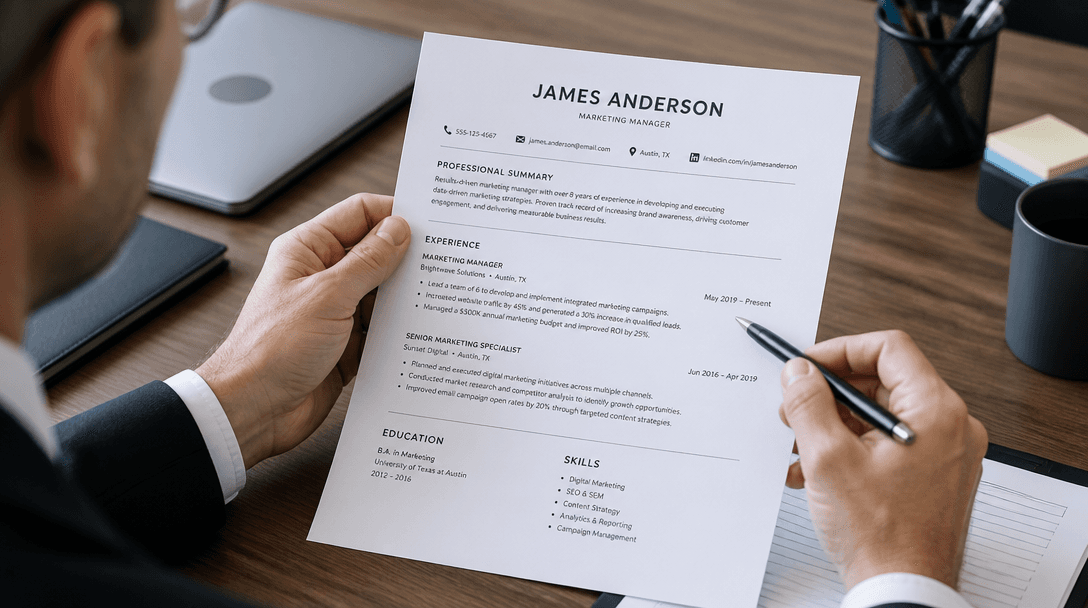
Is the resume readable and organised? The HR executive screening 200 resumes in a morning doesn't have time to search for information. If your qualification, contact details, and relevant skills are clearly visible in a quick glance, you pass this stage. If your resume is a wall of text with no formatting, buried information, or (worst case) handwritten on plain paper, you're at a disadvantage before the interview even starts.
Age and gap analysis. For manufacturing roles, most companies prefer candidates under 28 for operator positions and under 30 for technician/supervisor roles. If there are gaps in your education or employment timeline, the screener notes them for the interviewer to ask about. Gaps aren't automatic disqualifiers, but unexplained gaps raise questions. If you took time off to help with a family business, prepare for coaching certification, or deal with a personal situation, have a brief, honest explanation ready.
Interview panel conducting a candidate evaluation session
Skills vs Attitude - Which One Wins in Manufacturing Hiring
Here's the most consistent insight from every HR manager I spoke with: for fresher hiring, attitude beats skills almost every time. Not because skills don't matter - they do - but because manufacturing companies know they'll train you anyway. What they can't train is your work ethic, your reliability, and your willingness to learn.
An HR manager at a Tier 1 auto component company in Oragadam told me: "I'd rather hire an ITI fresher who shows up on time, listens carefully, and asks questions when he doesn't understand, than a diploma holder who acts like the work is beneath him. The first guy will be productive in two weeks. The second guy will leave in two months."
What does "attitude" actually mean in a manufacturing interview context? It shows up in specific, observable ways. Are you making eye contact with the interviewer? Are you sitting up straight and engaged, or slouched and looking around? When asked a question you don't know the answer to, do you try to bluff, or do you say "I don't know that yet, but I'm willing to learn"? Manufacturing HR teams have interviewed thousands of candidates - they can distinguish genuine confidence from arrogance, and honest humility from lack of interest, within minutes.
Willingness to work shifts is a specific attitude marker that HR teams evaluate carefully. Manufacturing runs on shifts, and many freshers - especially those who've never worked before - hesitate when asked about night shifts or rotating schedules. If you say "I'm comfortable with any shift" without hesitation, that single response puts you ahead of candidates who hedge or ask for only day shifts. Companies need people who'll work when production demands it, not only when it's convenient.
The Questions That Test Attitude
"Are you comfortable working overtime?" The right answer isn't just "yes" - it's "yes, I understand that production demands change and I'm prepared to work extra hours when needed." This shows you understand the business reality, not just that you want the overtime pay.
"Why manufacturing? You could work in IT or a desk job." This question specifically tests whether you've made a conscious choice or are just desperate. A strong answer references what you enjoy about hands-on work, what you learned during your practical training, or what appeals to you about creating tangible products. A weak answer is "I couldn't get an IT job so I'm trying manufacturing."
The Hidden Criteria That Most Candidates Miss
Beyond the formal interview, HR managers evaluate candidates in ways that most freshers are completely unaware of.
Behaviour in the waiting area matters. Several HR managers mentioned that they - or their team members - observe candidates while they wait. Are you sitting quietly and reviewing your documents? Good. Are you loudly chatting on your phone, complaining about the wait, or littering? That gets noted. One HR manager at a Sriperumbudur electronics company told me they've rejected candidates specifically because of rude behaviour toward the security guard at the gate. "If you're disrespectful to our security staff, you'll be disrespectful to your supervisor."
How you handle the aptitude test reveals more than your score. Many manufacturing walk-ins include a basic aptitude or trade knowledge test. HR managers told me they look beyond the score at the attempt quality. Did you attempt all questions or leave blanks? Did you work systematically or randomly? Even if your score is average, a complete, neat test paper suggests diligence - a trait manufacturing companies value highly.
Your questions reveal your priorities. When the interviewer asks "Do you have any questions?" - the question you ask (or don't ask) tells them what you care about. If your only question is about salary, they perceive you as transactional. If you ask about training, growth opportunities, or the team structure, they perceive you as invested. The best question I've heard a fresher ask at a walk-in: "What does the best performer on this team do differently from everyone else?" That question earned the candidate a callback the same day.
Instant Dealbreakers - What Gets You Rejected Immediately
Arriving late without a valid reason. Manufacturing companies run on schedules - shift starts at 6 AM, not 6:15 AM. If you can't arrive on time for the interview, they assume you won't arrive on time for work. The rare exception: if you have a genuine reason (transport breakdown, medical emergency), explain it briefly and apologise. Most interviewers are understanding of genuine problems.
Lying about your qualification or experience. This happens more often than you'd expect. Candidates claim certifications they don't have, inflate marks they can verify from your original certificates, or describe internships that didn't happen. HR managers at larger companies verify certificates on the spot. Getting caught in a lie is an instant and permanent rejection - your name goes into a "do not hire" list that persists across recruitment cycles.
Badmouthing a previous employer. Even if your last company was genuinely terrible - even if they didn't pay you on time or treated you poorly - criticising them in an interview makes the new employer wonder what you'll say about them. Keep previous employment discussions neutral: "The role wasn't the right fit for my skills" is always better than "The company was badly managed and the supervisor was unfair."
Showing no knowledge of the company. When the interviewer asks "What do you know about our company?" and your answer is a blank stare or "I saw the walk-in announcement," you've confirmed that you're applying randomly rather than specifically. Five minutes of research on their website prevents this entirely. There's no excuse for walking into an interview knowing nothing about the employer - your phone has internet, their website is public, and the information is free.
The Habit That Sets You Apart
After every interview - whether you get selected or not - send a brief thank-you message to the HR contact if you have their number or email. Something simple: "Thank you for considering me for the [role] position. I appreciated the opportunity to learn about [company name]." Almost nobody does this, which is exactly why it makes an impression. In cases where the company has a waitlist and needs to fill unexpected vacancies later, the candidate who followed up politely is the one they call first.